Transportation Market Update and Best Practices for Safely Shipping Golf Carts
Mar 16, 2026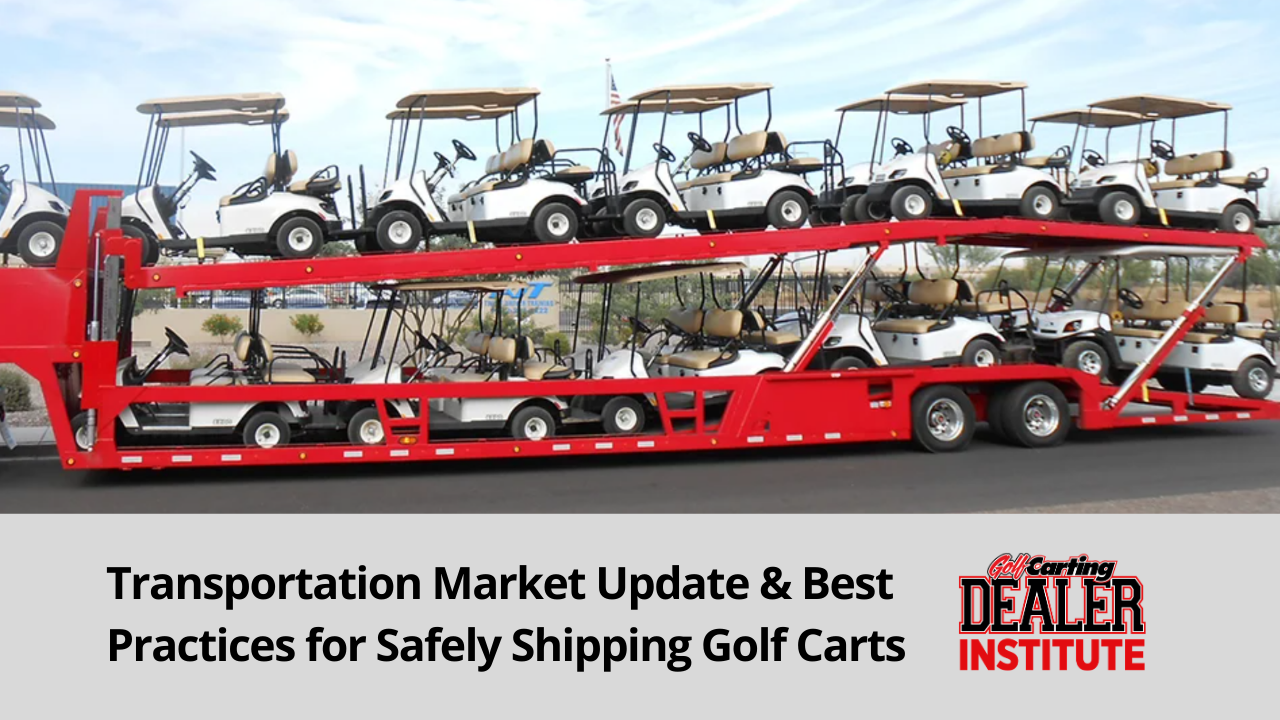
As the golf cart industry continues to evolve, transportation remains a critical piece of the supply chain. Understanding current market conditions and following proven transport best practices can help dealers manage costs, reduce damage, and improve customer satisfaction.
Transportation Market Outlook
The transportation market continues to stabilize after several years of volatility. Freight volumes remain relatively soft across many sectors, while carrier operating costs, including labor, equipment, insurance, and compliance — remain elevated. As a result, rates are expected to stay steady with modest upward pressure rather than significant declines. Capacity has tightened in certain lanes as smaller carriers exit the market and regulatory requirements continue to impact driver availability. For golf cart dealers, this means transportation may not always be immediately available during peak seasons, making advance planning and strong carrier relationships increasingly important. While the market is not experiencing rapid growth, it is also not contracting sharply. Dealers who plan ahead, communicate clearly with carriers, and understand seasonal trends will be better positioned to control costs and avoid disruptions throughout the year.
Safely and Securely Transporting Golf Carts: Best Practices for Dealers
1. Choosing the Right Carrier & Equipment
Not all carriers are equipped to handle golf carts properly. Dealers should work with transport providers experienced in hauling specialty vehicles and confirm that the trailer type, open or enclosed, is appropriate for the size, configuration, and value of the cart. Verifying cargo insurance coverage before shipment is also essential.
2. Preparing the Cart for Transport
Preparation should be simple and consistent. Carts must be operable for loading and unloading, with batteries, fuel levels, and overall condition meeting carrier requirements. Any loose or non permanent items should be removed or secured prior to transport. Best practices include photographing carts before loading, securing components that could shift during transit, and confirming serial numbers and paperwork match the bill of lading (BOL) and the order to avoid delivery discrepancies.
3. Secure Loading & Tie-Down Best Practices
Proper loading and securement are critical to preventing damage during transit. Straps should never rest directly on the cart, as this can cause scratches, scuffs, or pressure damage. Using dunnage or protective padding between the strap and the cart, as well as between the cart and the trailer walls, helps minimize cosmetic and structural damage. Whenever possible, carts should be secured using a combination of wheel chocks and strategic strap placement. Placing a strap in front of and behind the cart, in conjunction with tire chocking, helps control forward and backward movement during braking and acceleration. This layered approach to securement provides added protection and reduces the risk of shifting in transit.
4. Delivery Inspection & Dealer Checklist
Upon delivery, carts should be inspected. Dealers should note any damage or discrepancies while the driver is present. Always keep your own pictures for claims. Prompt documentation helps streamline resolution if claims or corrections are needed.
Final Takeaway
While the transportation market is expected to remain steady, preventing damage comes down to execution. Selecting the right carrier, ensuring carts are properly prepared and loaded, and working with experienced transportation partners all play a critical role in reducing risk and ensuring carts arrive in sale-ready condition.
Contact:
Ray Cantwell
727-267-0287
[email protected]
www.lstgroupllc.com